The ocean is an artist, shaping stone with its relentless waves and tides. Along coasts around the world, the sea carves rocks into astonishing shapes—some rounded, others jagged or stacked—creating natural wonders that feel almost magical. Here are seven coastal rock formations shaped by water over millennia.
Moeraki Boulders – New Zealand
On Koekohe Beach, massive spherical boulders lie scattered along the sand, remnants of ancient mudstone erosion. Ranging from 0.5 to 2.2 meters across, these grey concretions are nearly perfect spheres. Māori legends say they are the remains of baskets and calabashes from a sunken canoe, adding a mystical charm to these geological giants.
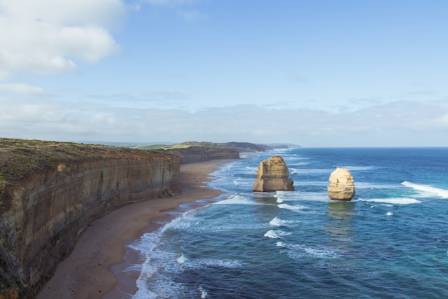
Gibson Steps (The Twelve Apostles) – Australia
Limestone stacks along Victoria’s Great Ocean Road rise dramatically from the Southern Ocean. Originally taller, only eight remain today. Waves continually pound their bases, sculpting their shapes and reinforcing the layered patterns that make this coastline one of the most photographed in Australia.
Punakaiki Pancake Rocks – New Zealand
Along the South Island’s West Coast, layered limestone known as Pancake Rocks reveals horizontal striations formed by alternating soft and hard marine sediments. High tides force seawater through vertical blowholes, producing geyser-like sprays that highlight the rocks’ unusual “pancake” layering.
Turnip Rock – Michigan, USA
Off Lake Huron’s shoreline, Turnip Rock perches in shallow water like an inverted mountain. Centuries of wave action eroded the limestone at its base, leaving the upper portion precariously balanced. The only way to reach this miniature marvel is by kayak or canoe, making it a fun destination for adventurous explorers.
Fingal’s Cave – Scotland
This basalt sea cave on Staffa Island showcases an archway formed by lava flows and refined by crashing waves. Inside, the natural acoustics amplify the roar of the sea, giving visitors a surreal experience as the ocean surges through the columns.
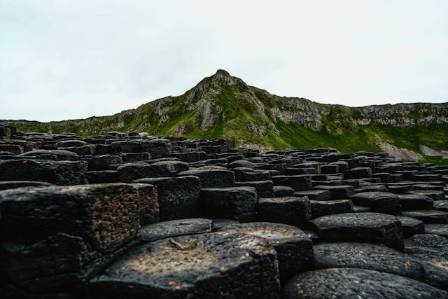
The Giant’s Causeway – Northern Ireland
Here, about 40,000 interlocking basalt pillars stretch from the cliffs to the sea. Formed by volcanic activity and shaped further by wave erosion, the hexagonal columns resemble stepping stones leading into the ocean, creating one of Northern Ireland’s most iconic landscapes.
Wave Rock – Australia
Though inland, Wave Rock in Hyden looks exactly like a giant curling wave frozen in time. Shaped by ancient water runoff and wind erosion, its dramatic curve illustrates how even episodic water flows can create formations reminiscent of ocean waves.
Conclusion
From rounded boulders to towering stacks and crashing blowholes, these coastal formations are a testament to the patient artistry of the sea. Each rock tells a story of centuries of waves sculpting stone into shapes that captivate the imagination. Next time you visit a shoreline, look closely—you may discover nature’s sculpted masterpiece waiting beneath the surf.