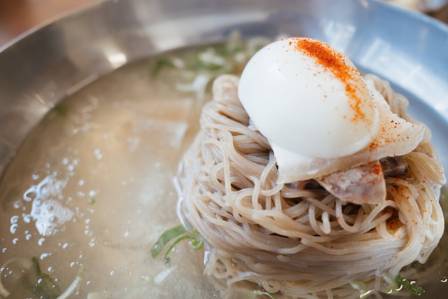
When the summer sun becomes intense, people in Korea often cool off with one of their most iconic dishes: naengmyeon, or chilled noodles. Known for its icy broth and pleasantly chewy texture, this dish is more than just a meal—it’s a symbol of Korean food culture enjoyed throughout the peninsula. Let’s explore its background, varieties, and regional differences to understand why it remains a favorite during hot weather.
What Is Naengmyeon?
Naengmyeon literally means “cold noodles” in Korean. It’s a traditional dish made with long, thin noodles served either in a cold broth or mixed with a spicy sauce. Unlike most noodle soups around the world, this dish is intentionally served ice-cold, making it especially refreshing in summer.
Although it’s now strongly associated with South Korea, naengmyeon actually originated in North Korea, particularly in areas like Pyongyang and Hamhung. Interestingly, it was once a winter dish, developed from traditions of preserving buckwheat noodles and radish kimchi (dongchimi) during cold months. After the Korean War, the dish spread to the South and gradually became a summer staple.
How Naengmyeon Is Prepared
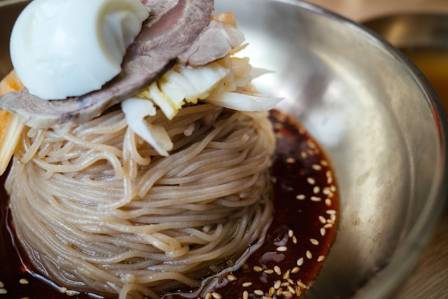
The noodles are usually made from buckwheat flour, though versions using potato starch, sweet potato starch, or arrowroot starch are also common. These noodles are thin, elastic, and often very long—so long that diners typically cut them with scissors before eating.
The broth is a defining feature. Traditional versions use beef, chicken, or dongchimi-based liquid. Some modern recipes add pear juice or mineral water to enhance clarity and sweetness. Ice cubes are often included to keep the dish chilled.
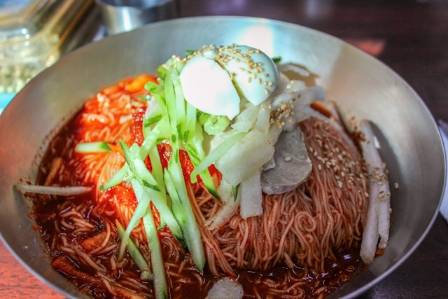
Common toppings include sliced beef, boiled eggs, pickled radish, cucumber strips, and sometimes slices of Asian pear. Diners may also add mustard or vinegar for extra flavor.
Two Main Styles of Naengmyeon
There are two primary types of naengmyeon:
Mul Naengmyeon
This version features noodles in a clear, cold broth made from beef or dongchimi. It’s light, slightly tangy, and incredibly refreshing—perfect for hot days.
Bibim Naengmyeon
Instead of broth, this type is mixed with a spicy sauce made from gochujang, garlic, sesame oil, sugar, and vinegar. The result is a bold combination of sweet, spicy, and tangy flavors. Some variations include raw fish for added depth.
Regional Variations
Different regions have their own unique takes on naengmyeon:
Pyongyang Naengmyeon
Originating from Pyongyang, this style uses mostly buckwheat noodles and a clear, mild broth. The flavor is subtle and clean, focusing on simplicity.
Hamhung Naengmyeon
From Hamhung, this version typically uses chewy noodles made from sweet potato starch and is often served as bibim naengmyeon. It features a spicy sauce and may include fermented raw fish.
Jinju Naengmyeon
A specialty from Jinju in South Korea, this variation is known for its colorful presentation. It often includes napa cabbage kimchi, beef, and egg strips. Once popular as a late-night dish, it has recently regained attention as part of regional heritage.
Cultural Importance
Naengmyeon is more than just food—it carries cultural meaning. During the 2018 inter-Korean summit, North Korean leader Kim Jong-un arranged for chefs from Pyongyang’s famous Okryugwan restaurant to serve naengmyeon to South Korean President Moon Jae-in. This gesture symbolized unity and shared cultural roots.
Its signature icy presentation also sets it apart from other noodle dishes worldwide. The cooling effect makes it especially beloved during Korea’s hot and humid summers.
Today, it’s common for restaurants to provide scissors so diners can cut the long noodles—an interesting tradition tied to the dish’s history.
Final Thoughts
Whether you prefer the refreshing clarity of mul naengmyeon or the bold heat of bibim naengmyeon, this dish offers a unique and memorable experience. With its rich history, cultural relevance, and refreshing qualities, naengmyeon stands out as one of Korea’s most iconic summer foods.
If you ever visit Korea—or even a local Korean restaurant—be sure to try a bowl. It’s one of the best ways to cool down while enjoying an authentic taste of Korean tradition.