Walruses are among the most magnificent wonders of the polar regions. These massive marine mammals play a vital role in the Arctic ecosystem, yet they face increasing challenges due to environmental shifts. Understanding their biology and behavior is the first step toward appreciating these unique ocean dwellers.
Geographical Distribution and Physical Stature
Wild walruses are primarily categorized into two distinct subspecies: the Atlantic and the Pacific. The Atlantic variety inhabits the seasonally frozen waters of Canada, Greenland, Norway, and Russia, with a population estimated at approximately 25,000. The Pacific walrus maintains a broader range between the United States (Alaska) and Russia, spanning the Bering, Chukchi, and Laptev Seas. This group is more numerous, with roughly 200,000 individuals remaining in the wild.
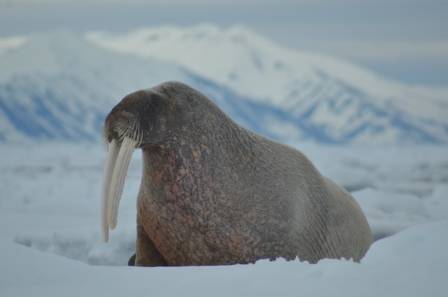
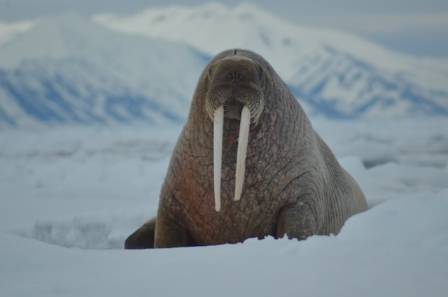
In terms of size, these animals are truly gargantuan. A male Pacific walrus can reach lengths of 3.6 meters and weigh more than 1,500 kilograms. This immense body mass, largely composed of blubber, is a biological necessity that allows them to survive the frigid temperatures of the Arctic.
Functional Anatomy and Maternal Care
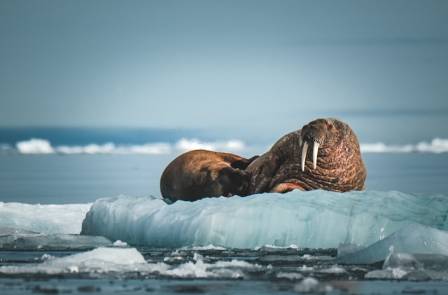
A defining characteristic of both male and female walruses is their long ivory tusks. These are not merely decorative; walruses use them to pull their heavy bodies out of the water onto sea ice, to maintain breathing holes in frozen surfaces, and to defend themselves against predators or rivals.
Socially, walruses exhibit strong family bonds. Mothers are fiercely protective of their offspring. When a calf is threatened, the mother will often clutch it to her chest with her flippers before diving into the safety of the water. Because walruses reproduce relatively infrequently, the survival of every calf is critical to the stability of the population.
Lifespan, Diet, and Habitat Preferences
In the wild, a walrus can live for about 40 years. Their age is often visible on their skin, which frequently bears a network of scars from physical disputes during the mating season. Despite their aquatic nature, they are rarely found in the deep ocean. Instead, they prefer shallow coastal waters where they can easily forage along the seafloor for clams, mollusks, shrimp, crabs, and sea cucumbers.
The continental shelf of the Chukchi Sea is a vital feeding ground for Pacific walruses during the spring and summer. They rely heavily on sea ice as a platform for resting between dives, as well as a safe space for breeding, nursing, and seeking shelter from turbulent weather and predators.
Environmental Vulnerabilities and Modern Threats
Walruses are highly sensitive to noise and external disturbances. When resting in large groups, they can be easily spooked; if startled, a massive stampede toward the water can occur, which often proves fatal for smaller calves caught in the path of the adults.
Currently, the most significant threat to the species is climate change. As sea ice disappears, Pacific walruses are forced to rest on land, which is often much farther from their primary feeding grounds. In the Atlantic, the opening of the Arctic to increased shipping, tourism, and industrial activity has heightened the risk of human-caused disturbances. The stabilization of polar regions is essential not only for the survival of the walrus but for the health of global food production and the prevention of extreme weather events worldwide.