Grasslands, often known by names such as prairies, savannas, or steppes, are some of the planet’s most expansive and ecologically crucial ecosystems. These vast open spaces, filled with rolling hills and an abundance of grasses, play an important role in supporting biodiversity, agriculture, and cultural heritage. Below are eight of the largest grasslands globally, each carrying unique ecological and historical significance.
1. Eurasian Steppe – Grass Heights: Up to 4 Feet
The Eurasian Steppe is the largest continuous grassland on Earth, stretching more than 5,000 miles from Hungary to Mongolia. Spanning countries such as Russia, Ukraine, and Kazakhstan, this immense region is characterized by vast plains, sparse trees, and resilient grasses that reach heights of up to 4 feet during the summer months.
2. Great Plains – Grass Heights: Up to 6 Feet
The Great Plains of North America, covering approximately 1.3 million square miles across the United States and Canada, is one of the most iconic grasslands. Known for its tallgrass prairies and shorter grasses in drier areas, the Great Plains is home to grasses that can grow up to 6 feet tall in the wetter regions. These plains were historically abundant with bison herds, which provided sustenance to Native American tribes.
3. Pampas – Grass Heights: Up to 5 Feet
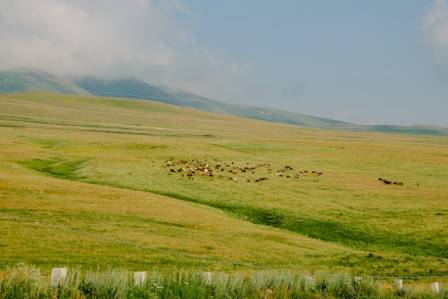
Spanning Argentina, Uruguay, and Brazil, the Pampas cover around 289,000 square miles. Known for their fertile soil, these plains are dominated by grasses that can grow up to 5 feet tall. The Pampas are closely linked with the culture of the gauchos, South American cowboys who have tended cattle on these lands for generations.
4. Kazakh Steppe – Grass Heights: Up to 3 Feet
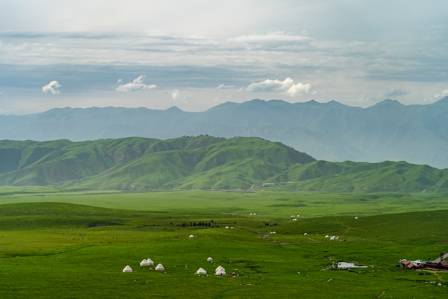
The Kazakh Steppe, a part of the larger Eurasian Steppe, spans 310,000 square miles in Kazakhstan. Characterized by a semi-arid climate, the grasses here rarely grow taller than 3 feet. Historically a key segment of the Silk Road, the steppe has long been a grazing land for Kazakh nomads, who continue to live in yurts and practice traditional herding.
5. Australian Outback – Grass Heights: Up to 2 Feet
Though typically associated with desert landscapes, the Australian Outback also contains expansive grasslands, covering around 2.4 million square miles. Grasses here are shorter, usually not exceeding 2 feet in height, due to the region's arid climate. Despite its tough conditions, the Outback supports unique wildlife such as kangaroos and emus, and continues to serve as grazing grounds for livestock.
6. Sahel – Grass Heights: Up to 2 Feet
The Sahel, stretching across 3,300 miles in Africa, serves as a transitional zone between the Sahara Desert and the savannas of sub-Saharan Africa. Covering about 1.9 million square miles, the Sahel is known for its drought-resistant grasses that typically grow up to 2 feet tall. The region has long been a vital trade route, and tales of ancient caravans crossing this arid land have shaped its historical importance.
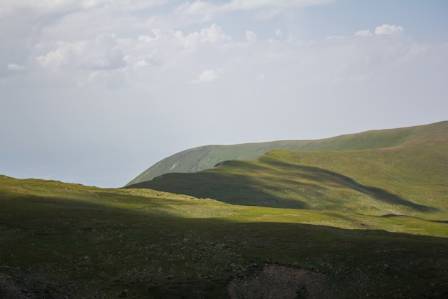
7. Velvet Grasslands – Grass Heights: Up to 4 Feet
Located in central and southern Africa, the Velvet Grasslands span 270,000 square miles. These grasslands are named for the soft, lush appearance of the grasses during the rainy season, which can grow up to 4 feet tall. The region is teeming with wildlife, including elephants, lions, and antelopes.
8. Tibetan Plateau Grasslands – Grass Heights: Up to 3 Feet
The Tibetan Plateau Grasslands, which cover around 965,000 square miles, are the highest grasslands on Earth, situated at an average elevation of 14,800 feet above sea level. Despite the harsh conditions, these grasslands support hardy grasses that rarely exceed 3 feet in height. The plateau is known as the "Roof of the World" and has long been a grazing ground for Tibetan nomads who herd yaks across the region.
Conclusion
Grasslands are vast, diverse, and ecologically significant regions that have supported both human and animal life for millennia. From the windswept plains of the Eurasian Steppe to the cultural heartland of the Pampas, each of these ecosystems tells its own story of resilience, adaptation, and survival.