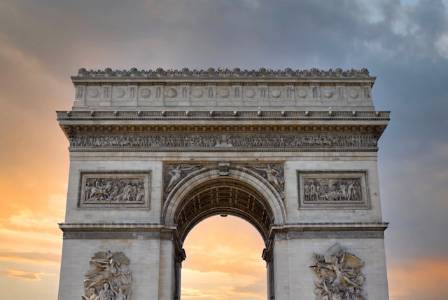
Standing proudly at the western end of the Champs-Élysées, the Arc de Triomphe is one of Paris’s most iconic structures. Commissioned by Napoleon Bonaparte to honor the French army’s victories, this colossal arch has become a symbol of national pride and historical significance. Its intricate carvings, towering height, and commanding presence make it a must-see attraction for visitors from around the world.
Historical Background of the Arc de Triomphe
The idea for the Arc de Triomphe emerged in 1806, following Napoleon’s triumph at Austerlitz. Inspired by ancient Roman architecture, the emperor envisioned a grand monument to celebrate France’s military achievements. Designed by Jean Chalgrin, construction began but was delayed due to political turmoil, only reaching completion in 1836 under King Louis-Philippe. Since then, it has witnessed countless historical events, from victory parades to solemn memorials.
Architectural Design and Features
Rising 50 meters high and spanning 45 meters wide, the Arc de Triomphe is a masterpiece of Neoclassical design. Its four massive pillars support a richly decorated attic, adorned with sculpted reliefs depicting significant battles and revolutionary moments. The most famous of these is François Rude’s La Marseillaise, a dramatic portrayal of the French spirit. Beneath the arch lies the Tomb of the Unknown Soldier, a poignant tribute to those who perished in World War I.
Symbolism and Cultural Impact
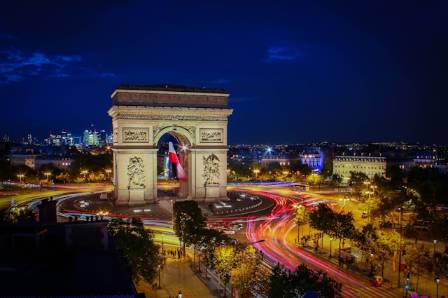
More than just an architectural marvel, the Arc de Triomphe embodies France’s resilience and patriotism. It has served as the focal point for national celebrations, including the annual Bastille Day military parade. The eternal flame at the Tomb of the Unknown Soldier is rekindled daily, ensuring that the sacrifices of fallen soldiers are never forgotten. Over time, the monument has also become a powerful emblem in art, literature, and global popular culture.
Visiting the Arc de Triomphe
Today, visitors can climb to the top of the arch for a breathtaking panoramic view of Paris, including the Eiffel Tower, La Défense, and the sprawling Champs-Élysées. An underground passage provides safe access, avoiding the busy traffic of the Place de l’Étoile. The site also houses a small museum detailing its history, making it both an educational and visually stunning experience.
The Arc de Triomphe in Modern Times
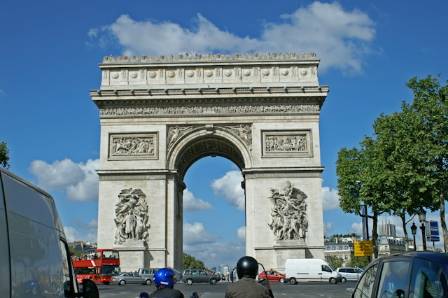
Despite being centuries old, the monument remains a vital part of Parisian life. It has undergone restorations to preserve its grandeur and continues to be a gathering place for both locals and tourists. In recent years, temporary art installations, such as Christo’s wrapped Arc, have reimagined its appearance, proving that even a historic landmark can evolve with the times.
As a testament to France’s enduring legacy, the Arc de Triomphe stands not just as a relic of the past, but as a living symbol of national identity. Its grandeur, historical weight, and central role in Parisian culture ensure that it will remain an everlasting icon for generations to come.