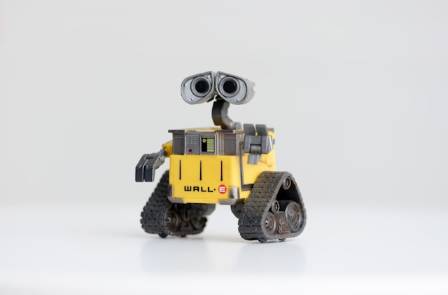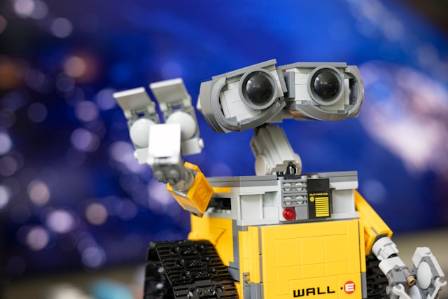
The iconic box-shaped or television-style robot represents a masterpiece of geometric engineering in the modern tech landscape. Known formally as cubic or prismatic robots, these machines move away from complex humanoid aesthetics to prioritize internal volume and structural stability. This specific design choice allows engineers to treat the robot as a modular mobile server, capable of housing high-density electronics while offering flat external surfaces that are perfect for mounting cutting-edge sensors and interactive displays.
Structural Logic of the Cubic Chassis
The primary advantage of the box robot lies in its spatial efficiency. Unlike curved or organic shapes, a television-inspired frame provides a predictable internal environment where components like lithium-polymer batteries, motherboard stacks, and cooling systems can be organized with precision. This "boxy" architecture is not just a stylistic choice but a functional necessity for modern edge computing. By using high-strength polymers or lightweight aluminum alloys, designers create a protective "vault" that shields delicate internal AI processors from external impacts and environmental hazards.
The flat side panels of a cubic robot serve as a versatile canvas for mechanical expansion. Engineers can easily bolt on modular attachments such as articulated grasping arms, high-speed conveyor belts, or specialized laboratory tools without the need for custom, curved brackets. This "plug-and-play" physical interface makes the box robot one of the most adaptable platforms in industrial and educational settings.
Intelligence and Computer Vision Integration
Modern box robots utilize their distinct flat front-faces to house sophisticated "vision centers." By mounting stereo cameras, 3D LiDAR, and ultrasonic arrays on a stable vertical surface, these robots achieve superior spatial awareness. This setup allows the machine to perform Simultaneous Localization and Mapping (SLAM) with high accuracy, navigating through complex human environments like hospitals or smart warehouses.
The software architecture powering these cubic units often relies on decentralized processing. While the robot moves autonomously, its "brain" can handle multiple streams of data, such as facial recognition for user interaction or path prediction for obstacle avoidance. The wide, flat top of the robot also serves as an ideal mounting point for 360-degree sensors, giving the machine a complete view of its surroundings without the blind spots often found in more complex, limb-heavy designs.
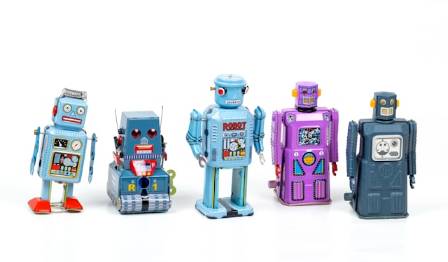
Versatile Applications from Classrooms to Research Labs
Because of their approachable "TV-like" appearance, these robots are highly effective in social and educational roles. In classrooms, the boxy frame is a friendly, non-intimidating tool for teaching coding and mechanical logic. Students can treat the robot as a blank slate, decorating its exterior while programming its interior. Its low center of gravity ensures that it remains upright even during the most enthusiastic "trial and error" coding sessions.
In professional research and medical fields, the stability of the cubic form is a critical asset. These robots are frequently used as mobile delivery units for sensitive samples or as telepresence platforms. The large front surface can be fitted with high-definition OLED screens, allowing a remote doctor or specialist to "appear" in a room with a clear, stable image. This creates a sense of presence and trust that is difficult to achieve with smaller, more unstable mobile devices.
Longevity and the Evolution of Modular Hardware
Maintaining a television-shaped robot is a streamlined process compared to more intricate mechanical systems. The modular nature of the box allows technicians to quickly access internal compartments for battery swaps, sensor cleaning, or processor upgrades. This "right-to-repair" philosophy ensures that a single robot chassis can stay in service for many years, evolving as new software and hardware components become available.
As the industry moves toward swarm intelligence and 5G-enabled automation, the box robot is expected to remain a dominant form factor. Its simplicity, durability, and immense capacity for customization make it the perfect vessel for the next wave of artificial intelligence. By focusing on a shape that prioritizes function over form, the cube revolution is ensuring that the robots of tomorrow are as reliable as they are intelligent.