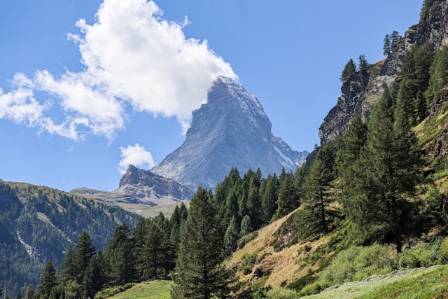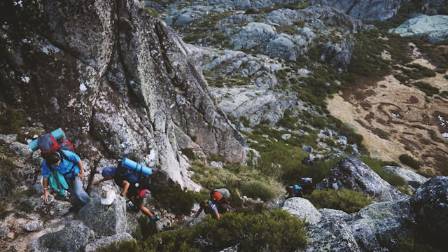
Rock climbing is a perfect example of how a timeless human activity can evolve into a modern extreme sport. What started as a practical skill has grown into a global phenomenon, pushing the limits of human strength, technique, and imagination.
Since the late 19th century, recreational climbing has expanded rapidly, fueled by new gear, inventive tactics, and the development of indoor climbing gyms that have introduced thousands of newcomers to the sport. Meanwhile, elite climbers continue to explore remote corners of the world in search of untouched rock and uncharted routes. Understanding climbing today requires a look back at its fascinating history and the specialized vocabulary that has emerged around it.
Climbing Through the Ages
Ancient civilizations around the globe have evidence of climbing on challenging terrains. In Mustang, Nepal, archeologists found burial caves accessible only by scaling sheer cliffs. In the American Southwest, indigenous tribes lived atop mesa cliffs, relying on climbing for survival. Safety, exploration, and necessity often drove early humans to tackle these vertical landscapes.
Modern recreational climbing emerged in three key regions: England’s Peak and Lake Districts, Germany’s Elbe Sandstone formations, and Italy’s Dolomites. By the early 20th century, climbers were experimenting with early inventions such as steel carabiners and soft iron pitons.
Free Climbing vs. Aid Climbing
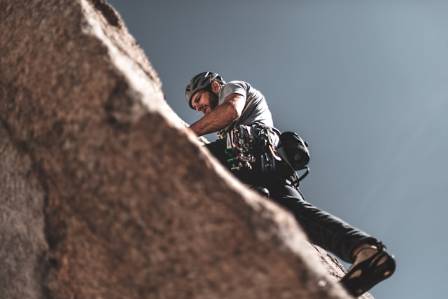
Free climbing doesn’t mean climbing without a rope—that’s free soloing, the extreme discipline made famous by Alex Honnold’s no-rope ascent of Yosemite’s El Capitan, documented in Free Solo. Instead, free climbing refers to ascending using only one’s own body for upward movement, with ropes or pads serving solely as safety measures. Aid climbing, by contrast, involves using gear to pull oneself up the rock, often step by step.
Debates over these styles date back more than a century. In 1911, German climber Paul Preuss criticized contemporaries for relying on pitons to overcome obstacles they couldn’t surmount on their own. “The piton is an emergency aid, not a cornerstone of mountaineering,” he wrote, igniting one of climbing’s earliest discussions on ethics and style.
Bouldering: Movement as Art
While many climbers sought massive cliffs, a smaller group focused on refining precise movements on shorter routes. Bouldering—climbing small rocks or boulders without ropes—originated in Fontainebleau, France. Because it emphasizes technique over height, bouldering became the ultimate training ground for pushing the limits of free climbing.
In the 1950s and 60s, John Gill, an Air Force officer and mathematician in Colorado Springs, introduced gymnastics-inspired exercises and chalk for grip, innovations that are still standard practice today.
The Big Wall Era
Post-World War II, Yosemite Valley’s granite walls became the proving ground for ambitious climbers. Swiss immigrant John Salathé developed hardened steel pitons that could be removed and reused, enabling a golden era of aid climbing on iconic cliffs such as Half Dome and El Capitan. Mechanical ascenders, specialized hammocks, and other tools expanded what climbers could attempt safely.
Clean Climbing Revolution
For decades, hammering pitons into rock was the norm, but by the 1970s, climbers like Yvon Chouinard advocated for less invasive protection. Nuts and hexentrics, which could be slotted into natural cracks, allowed climbers to protect themselves without damaging the rock.
Bolts and Sport Climbing
Before the 1970s, practicing difficult moves while hanging on a rope—called “hang-dogging”—was frowned upon. But climbers began pre-rigging routes with bolts from above to refine sequences before attempting them from the bottom. This “top-down” approach, first explored in France’s Verdon Gorge and later in Oregon’s Smith Rocks, helped evolve modern sport climbing.
Climbing Grades: A Language of Difficulty
Climbers use a detailed grading system to measure challenge and progression. In North America, bouldering grades range from V0 to V16, sport and trad climbs from 5.0 to 5.15 (with letters a–d indicating finer difficulty), and aid climbs from A0 to A5. Risk is also noted, with ratings such as PG, R, or X for potential fall danger.
The Indoor Climbing Boom
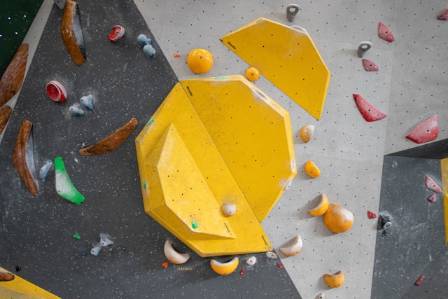
Even in 1939, climbers sought practice on architectural facades at the University of Leeds and the University of Washington. The first dedicated indoor walls appeared in the 1980s, expanding globally by the mid-1990s. Early gyms were rough, with dusty air and homemade walls, but today, commercial facilities feature professional route setters, quality holds, and structured training programs.
Climbing’s Olympic Journey
From local competitions to the World Cup series, climbing gyms nurtured the sport into organized competition. The 1988 International Sport Climbing Competition at Snowbird, Utah, marked a milestone leading to IFSC World Cup recognition and climbing’s inclusion in the 2020 Tokyo Olympics. Competitors now vie for a single medal across bouldering, lead, and speed disciplines, though future Games may award each separately.
Big Wall Free Climbing Renaissance
The early 2000s saw a resurgence in big wall free climbing, led by Tommy Caldwell and the Huber brothers. Applying sport climbing techniques to Yosemite’s massive cliffs created a new era of 5.13 and 5.14 routes. Today, climbers routinely apply indoor techniques to granite big walls, translating gym-honed movements into outdoor challenges.
The Quest for Untouched Stone
With roughly 450 commercial gyms in the U.S. and more opening every month, climbing has captured mainstream attention. Popular outdoor areas face overuse, pushing climbers to explore untouched landscapes.
“You can’t just discover another Everest,” says National Geographic explorer Mike Libecki, “but there are still bouldering fields, sport crags, and big walls waiting to be climbed. The unknown is the ultimate adventure.”