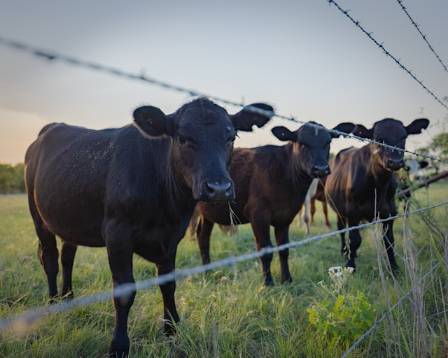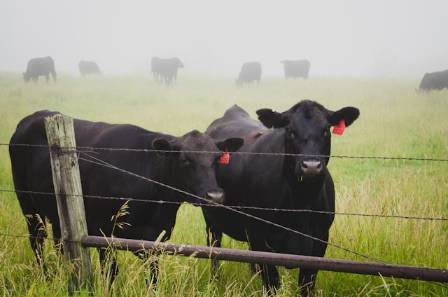
“Other states are carved or born; Texas grew from hide and horn.” Bertha Hart Nance’s 1932 observation captures the essence of Texas cattle ranching—an institution intertwined with the state’s social, economic, and political identity for over five centuries. From Spanish colonial beginnings to modern diversified operations, ranchers have shaped Texas’s story, adapting to war, climate, and industrial change while preserving a spirit of resilience. This is the history of big horns, big ranches, and the even bigger legends that define the Lone Star State.
The Roots: Spanish Colonial Beginnings to Anglo Settlement
Texas ranching’s origins trace to 1493, when Christopher Columbus brought the first Spanish cattle—precursors to the Texas longhorn—to Hispaniola. By the 16th and 17th centuries, cattle-raising spread north through Spanish Mexico into present-day Texas, taking root in the Rio Grande Valley. By 1680, thousands of cattle roamed the El Paso region, tended first by Spanish missionaries and later by private ranchers. Vaqueros—mostly from mixed socio-racial backgrounds (mestizo, mulatto, Indigenous, African)—were the original cowhands, working as independent contractors with their own horses and tools. In 1778, the Spanish crown imposed the controversial Fondo de Mestenos (Mustang Tax) on unbranded livestock, spurring early cattle drives to supply Spanish soldiers in Louisiana during the American Revolution. The tax’s revocation in 1795 accelerated drives, but the Mexican War of Independence (1810–1821) dissolved the Spanish ranching economy. The war’s end brought Stephen F. Austin’s colony, where Anglo settlers merged eastern ranching techniques with Spanish-Mexican traditions, and their cattle interbred with Spanish stock to create the iconic Texas longhorn. By the 1830s, settlers pushed into arid northern Texas, and the longhorn—hardy and self-sufficient—became their companion, fueling a booming ranching economy by the 1840s.
Land Grants and Expanding Markets: The Cowboy Era Begins
Land grants were the lifeblood of Texas ranching, starting under Spanish rule in the 18th century. In 1821, the Spanish crown offered vast northern lands to American emigrants, and by 1835, 41 grants had settled hundreds of Anglo families. When the U.S. annexed Texas in 1845, public land distribution for railroads and settlement opened new markets for cattle. Abundant land and growing demand gave rise to the “cowboy system”: open ranges, roundups, branding, and horseback management, with cowhands living modestly in line shacks and on trails. The Texas longhorn thrived here—lean, sturdy, and capable of enduring long drives to Red River ports for shipment to New Orleans, or west to California’s gold fields and north to Midwest packinghouses via the Shawnee Trail. However, the 1850s brought setbacks: Spanish Fever (a tick-borne disease) and the Civil War disrupted the Shawnee Trail, but the foundation for a national beef industry had been laid.
The Chisholm Trail: Post-Civil War Beef Boom
The Civil War (1861–1865) transformed Texas ranching: a federal blockade closed New Orleans markets, leaving Texas with a surplus of cattle, while northern cities craved beef. A steer worth $6–$10 in Texas sold for $30–$40 in the Northeast, igniting the golden age of the longhorn. With Texas railroads underdeveloped, Illinois businessman Joseph G. McCoy persuaded the Kansas Pacific Railway to build a stockyard in Abilene, Kansas—outside quarantine zones for Spanish Fever. The route to Abilene, pioneered by trader Jesse Chisholm, became the Chisholm Trail, running north from San Antonio through Texas to Kansas “cattle towns.” By 1870, nearly 15 million beef cattle roamed the U.S., with the trail moving thousands of herds annually. Drives were treacherous—harsh weather, thieves, stampedes, and conflicts with Indigenous peoples tested cowhands and cattle alike. The longhorn’s hardiness made it ideal, though its leanness led some ranchers to fatten cattle in Colorado or Wyoming before sale.
The People Behind the Ranch: Diversity on the Range
The mythic cowboy—tough, Anglo, and solitary—hides the diverse reality of Texas ranching. Vaqueros, with centuries of herding experience, remained vital: rancher Richard King recruited Mexican families (Los Kineños) to his ranch, where they revolutionized breeding and built the King Ranch into a legend. Enslaved Black cowhands performed much of the ranch labor in the 19th century; post-emancipation, figures like Daniel Webster Wallace purchased their own ranches. Women played pivotal roles too: Molly Goodnight (“Mother of the Panhandle”) co-founded the JA Ranch, conserved bison, and educated cowhands; Johanna July, a Black Seminole vaquera, managed her family’s livestock for life; Margaret Borland became the first female trail boss in 1873, leading 2,500 longhorns up the Chisholm Trail. These diverse voices—vaqueros, Black cowboys, and women—shaped ranching as much as any mythic figure.
Adapting to Modernity: Fences, Railroads, and Regulation
By the 1880s, industrialization forced Texas ranching to evolve. The longhorn’s reign ended: tick-borne diseases, crossbreeding with “higher-grade” cattle (like the King Ranch’s Santa Gertrudis breed), and railroads (making long drives obsolete) sidelined them. Open ranges vanished too—overgrazing, tensions with settlers, and 1874’s Glidden barbed wire enclosed lands. The 1886 “Great Die-Up” blizzards killed millions of cattle, a catastrophic blow. Meanwhile, Chicago meatpackers threatened to monopolize the industry. Ranchers fought back: merging lobbying groups to form the American National Live Stock Association in 1906, and securing the 1921 Packers and Stockyards Act, which regulated monopolies and ensured fair competition. These changes transformed ranching from a wild frontier enterprise to a regulated, modern industry.
An Ongoing Legacy: Diversification and Tradition
Today, Texas ranching endures through adaptation. Rising land and livestock costs have led ranchers to diversify—oil and gas, wind/solar energy, hunting, and tourism supplement cattle operations. The Fisher family’s Bullhead Ranch uses oil profits to sustain cattle-raising, while oil tycoon T. Boone Pickens turned Mesa Vista Ranch into a conservation and hospitality center. Historic ranches like the YO Ranch offer exotic game hunting, and the Matador Ranch balances cattle with recreation. The longhorn remains a cultural icon: the Guerra family has preserved Tejano ranching traditions and longhorns for centuries, while livestock shows and rodeos in San Antonio, Houston, and Fort Worth keep the spirit alive, educating younger generations. After 500 years of change, Texas cattle ranching is more than an industry—it’s the heart of the state’s identity, a testament to resilience and adaptation.