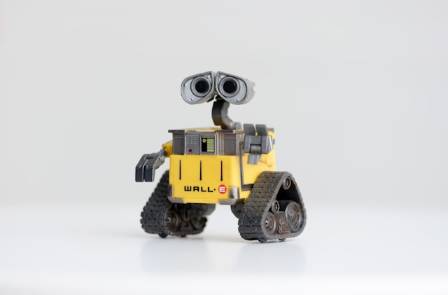
We’ve come a long way since the clunky mechanical robots seen in classic 1980s sci-fi films like Batteries Not Included and Short Circuit.
Back then, robots were often rough, industrial, or slightly eerie. Today, however, engineers increasingly design robots to feel friendly, expressive, and emotionally engaging—especially for environments where they interact closely with people. Many are intentionally soft, playful, or even pet-like.
Below is a collection of some of the most adorable robots ever made. Some are fluffy companions, others are tiny assistants, and all of them are designed to feel approachable and comforting.
Buddy – Emotional Companion Robot
Developed by Blue Frog Robotics, Buddy is marketed as a social robot that blends companionship with smart-home functionality. It can act as a family assistant, playmate, and even a basic security device.
Buddy’s screen-based face shows shifting expressions that reflect its “emotional state.” When someone arrives home, it brightens up; if ignored, it may appear sad or withdrawn; when engaged, it becomes lively and cheerful.
Beyond emotional interaction, Buddy can manage reminders, control smart-home devices, act as a timer, and even support video calls and simple games.
PARO – Therapeutic Robot Seal
PARO Robots U.S. Inc. created PARO, a robotic baby seal designed for therapeutic use in hospitals and care facilities.
Recognized by Guinness World Records as one of the most therapeutic robots, PARO is intended to support emotional well-being, particularly for patients dealing with stress, dementia, or long-term care needs.
Equipped with sensors for touch, light, sound, temperature, and posture, PARO reacts realistically to interaction. It responds to being petted, changes in environment, and human voices, producing soft seal-like sounds while moving gently to create a calming effect.
Somnox Sleep Robot
The Somnox Sleep Robot, created by Somnox, is designed specifically to improve sleep quality through physical comfort and guided breathing.
Unlike expressive robots, Somnox is shaped like a soft, huggable cushion. Users can hold it while sleeping, and it simulates a slow breathing rhythm to help regulate the user’s own breathing patterns.
It also plays soothing audio such as guided meditation, heartbeat sounds, or calming music. Motion sensors allow it to reactivate during the night if the user wakes up, helping them return to sleep more easily.
Woobo – Educational Robot for Kids
Woobo developed Woobo as an interactive learning companion for children.
The robot has a plush, toy-like body with a central screen that displays expressive facial animations. It can run educational apps, games, and activities that teach reading, math, and general knowledge.
Woobo also includes a voice assistant that answers questions, tells stories, and helps parents manage routines such as bedtime reminders or daily tasks.
Leonardo – Social Research Robot
Developed through collaboration involving the Massachusetts Institute of Technology and industry partners, Leonardo is a furry social robot designed for human interaction studies.
It resembles a mix between a small animal and a fantasy creature, with soft fur and expressive mechanical movements.
The robot is capable of tracking objects, responding to human expressions, and interacting socially. Rather than being a consumer product, Leonardo is primarily used for research and training in fields such as robotics, defense, and aerospace.
Kiki – Adaptive Companion Robot
Kiki, developed by Zoetic AI, is designed for people who want the emotional experience of caring for a pet without the responsibilities of a real animal.
It behaves like a small companion animal, learning from interactions and adapting its personality over time.
If treated kindly, Kiki becomes playful and responsive. If neglected or treated poorly, it may become distant or less interactive. It can even react to household events, such as responding to loud appliances like vacuum cleaners.
Bocco Emo – Family Communication Robot
Created by Yukai Engineering, Bocco Emo is a small family-oriented communication robot introduced at CES 2019.
It greets people when they enter a room by moving its head and lighting up. It also reacts to emotional words such as “happy” or “tired” using sounds, blinking lights, and antenna movements.
The robot is designed to help families stay connected through simple, emotional interactions.
Qoobo – The Headless Robot Pet
Also developed by Yukai Engineering, Qoobo is a cushion-shaped robot with a soft, furry tail.
It resembles a headless cat or dog and is designed purely for emotional comfort. When stroked, its tail begins to wag gently, mimicking the behavior of a real pet.
Qoobo does not speak or display a face—it focuses entirely on tactile companionship and relaxation, helping reduce stress through simple physical interaction.
Yume Neko Smile – Interactive Robotic Cat
Produced by Sega Toys, Yume Neko Smile is a robotic cat designed to behave like a real pet.
Covered in synthetic fur and equipped with touch sensors across its body, it reacts differently depending on how it is handled. Gentle petting may cause it to purr and nuzzle, while rough handling can trigger defensive reactions such as agitation.
Its goal is to simulate the experience of caring for a living animal.
Robi – Small Humanoid Companion Robot
DeAgostini Japan developed Robi as a compact humanoid robot that can walk, talk, and perform simple movements.
Standing around 34 cm tall, Robi contains multiple motors that allow it to turn, gesture, and dance. It can understand basic commands and respond with speech, while also functioning as a simple remote control for household devices.
Users can even assemble Robi gradually as part of a build-it-yourself kit series.
PaPeRo Petit – Advanced Family Robot
Created by NEC, PaPeRo Petit is a small but highly capable companion robot designed for home use.
It can recognize faces, detect people and pets using sensors, respond to voice commands, and hold simple conversations.
The company describes it as being close to the experience of interacting with a family member, thanks to its responsive behavior and emotional expressions.
Androbot Topo – Early Home Robot
Topo, developed in the early era of consumer robotics, was designed to operate with programming input from systems like the Apple II computer.
It could move through a room according to programmed instructions and even produce basic speech output, making it one of the earlier attempts at interactive home robotics.
TOMY Verbot – Voice-Controlled Retro Robot
The TOMY Verbot is a vintage robotic toy capable of responding to voice commands. It features small mechanical arms that move when activated and includes simple facial lighting effects to simulate expressions.
Despite its limited technology by modern standards, it was considered a charming and entertaining robotic toy in its time.
Robear – Care Assistance Robot
Developed by RIKEN, Robear is designed to assist in elderly care by lifting patients from beds to wheelchairs.
Although its appearance is soft and bear-like, its function is highly practical, focusing on healthcare support and physical assistance.
Its gentle design is intended to reduce anxiety for patients during caregiving procedures.
RoBoHon – Robot Smartphone
Created by Sharp Corporation, RoBoHon is a hybrid device combining smartphone functions with a humanoid robot body.
It can make phone calls, project images from its face, walk, talk, and respond to voice commands.
This combination makes it both a communication device and an interactive companion.
Murata Cheerleader Robot
Developed by Murata Manufacturing, this robot is designed to entertain and energize audiences.
It performs coordinated dance routines, uses lights for visual effects, and is known for its energetic “cheerleading” performances.
LOVOT – Emotion-Focused Robot
Created by GROOVE X, LOVOT is built entirely around emotional connection rather than utility.
It reacts to human presence and seeks attention or affection, sometimes approaching users for hugs or companionship.
It also includes sensors and navigation systems that allow it to move safely around a home environment.
Artie 3000 – Educational Coding Robot
Educational Insights developed Artie 3000 as a drawing and coding robot for children.
It helps users learn programming basics by drawing shapes and patterns based on coded instructions.
The robot combines entertainment with early STEM education, making coding more accessible and playful.
Final Thoughts
Modern robotics is no longer limited to industrial machines or futuristic humanoids. Many designers now focus on emotional connection, comfort, and friendliness.
From therapy seals and sleeping companions to fluffy learning robots and expressive pets, these creations show that robots can be more than tools—they can also be companions designed to comfort, entertain, and connect with humans in meaningful ways.