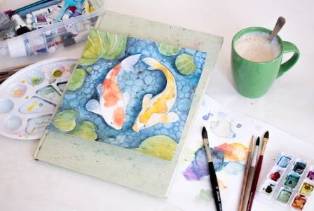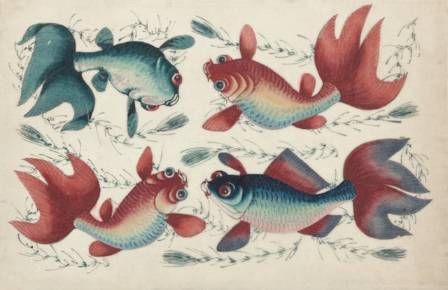
Discover how to paint a beautiful watercolor fish using just two colors, while learning how to blend pigments directly on paper to achieve a fluid, underwater feel.
Watercolor is especially suited for aquatic subjects because of its natural flow and transparency, which echo the movement of water and organic forms found beneath the surface. This is why UK-based designer and watercolor artist Inga Buividavice enjoys using this medium to express the elegance and diversity of nature.
In this guide, she demonstrates how to create a watercolor fish from beginning to end. From the first sketch to the final details, you’ll learn how to blend colors on the page, add texture like scales, and enhance your artwork with thoughtful finishing touches.
1. Create a Light Sketch of the Fish
Start by lightly drawing the basic shape of your fish on paper. This outline will act as a guide for your painting.
Keep the sketch minimal—avoid heavy lines or too much detail so the watercolor remains the focus. It’s also helpful to leave the tail loosely defined, as you’ll later form it using flowing paint rather than strict lines.
2. Apply the Base Colors
Begin painting with the fish’s body, then gradually move outward toward the tail. Leave the eye for later, as a slightly irregular shape can make it look more natural.
You don’t need many colors to achieve a striking result. Inga uses only blue and pink, adjusting the amount of water to create lighter and darker tones.
Using the wet-on-wet technique, she blends colors directly on the paper. Keeping the surface damp allows the pigments to spread and merge, producing soft transitions and a fluid, underwater effect. If you want more control, use less water so the paint stays in place.
Tip: Keep a tissue nearby to absorb excess paint or correct mistakes.
After the initial layer dries, you can add subtle lines to define the tail.
3. Add Details with Tools and Brush Techniques
Once the base layer is completely dry, start refining the painting.
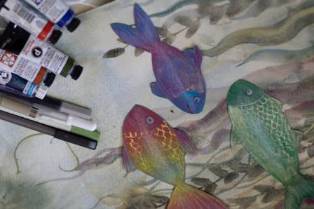
Inga uses a small oval brush with a dabbing motion to suggest fish scales. She also paints flowing lines from the body toward the tail to enhance structure and movement.
For finer details, she uses a graphite pencil to add texture and definition, such as delicate lines on the fins and scales. A light-colored Posca pen is then used to highlight certain areas and bring out contrast.
4. Finish the Composition
After completing the fish, step back and assess the overall balance of the artwork. Consider adding elements to fill empty spaces.
Inga paints simple seaweed and bubbles using loose, freehand strokes to complement the underwater theme. She also adds watercolor splatters for a dynamic finishing touch.
If the splashes don’t land exactly as planned, you can refine their shape with a small brush.