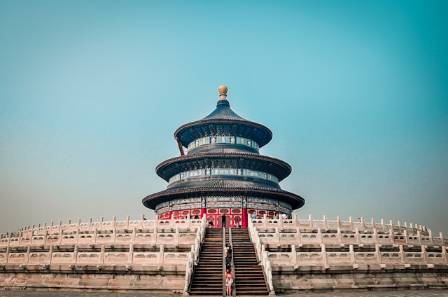
The Temple of Heaven, or Tiantan Park, is one of Beijing’s most remarkable landmarks. Built in 1420 under Emperor Yongle of the Ming dynasty, this complex served as a ceremonial site where rulers prayed for prosperity and good harvests. Today, it is both a World Heritage Site and a favorite escape for locals and visitors alike. Here are seven essential things to know before planning your trip.
1. A Legacy of Emperors
The temple was originally part of the imperial ritual system. Emperors of the Ming and Qing dynasties held ceremonies here to honor heaven and seek blessings for agriculture. Over time, names and structures changed—most notably, the Hall of Prayer for Good Harvests was finalized in the 18th century during the Qing dynasty. The site officially opened to the public in 1918.
2. Essential Facts About the Layout
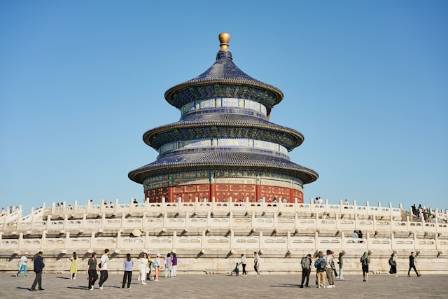
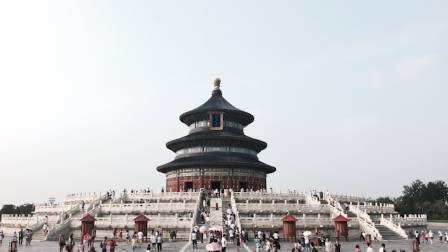
Several symbolic structures reflect the ancient Chinese belief that “heaven is round, earth is square.” The Hall of Prayer for Good Harvests, with its triple eaves, is the most iconic. South of it lies the Circular Mound Altar, a marble platform where rituals were performed. The Imperial Vault of Heaven and the Echo Wall demonstrate brilliant acoustic design, while the Red Stairway Bridge connects major sites along the north–south axis.
3. How to Get There and When to Visit
The main address is No. 7 Tiantann-nei-dongli, Dongcheng District. The closest subway stop is Tiantandongmen on Line 5. Visitors can also take a taxi directly to the East Gate by asking, “请带我去天坛东门(I want to go to the East Gate of the Temple of Heaven).”
Opening hours vary by season: from April to October the park opens at 6:00 and closes at 22:00, while from November to March it opens at 6:30. Key buildings such as the Hall of Prayer for Good Harvests are accessible from 8:00 to 17:30 in summer and until 17:00 in winter.
4. Tickets and Audio Guides
A standard entrance ticket costs 34 RMB in high season and 28 RMB in winter, while a through ticket, covering all major halls and altars, is slightly more. Tickets can be purchased at the gate or via WeChat (“天坛门票”). Foreign visitors should carry passports for real-name entry. Audio guides are available at each gate, priced at 20 RMB for Chinese and 40 RMB for other languages.
5. Highlights You Can’t Miss
The Circular Mound Altar features nine concentric rings of stones, symbolizing the ultimate Yang number. The Echo Wall allows whispered words to travel across its smooth arc. Nearby, the Triple Sound Stones create echoes that repeat once, twice, or three times depending on where you stand. The Long Corridor with 72 rooms and the Cypress Grove with trees over 600 years old make the visit even richer.
6. Stories and Symbolism
The complex is full of symbolic details. The Seven-Star Stones represent the Big Dipper, with an extra rock added during the Qing dynasty to suggest unity between Manchu and Han people. Numbers such as nine and five appear repeatedly in architecture, as they were believed to embody cosmic order. The round forms of the main halls emphasize heaven, while the square bases hint at earth.
7. Tips for the Best Experience
Arrive early in the morning to see locals dancing, singing, and practicing tai chi before the tourist crowds arrive. Wear comfortable shoes, bring water, and prepare for plenty of walking. Nearby, you can explore Hongqiao Market for souvenirs or catch a kung fu show at the Red Theater in the evening.
Conclusion
The Temple of Heaven is more than a collection of ancient buildings—it is a blend of architecture, ritual, and living culture. Whether you’re intrigued by its symbolism, fascinated by its acoustics, or simply enjoying the morning atmosphere, this site offers a window into China’s history and spirit. With these seven insights, you’ll be ready to experience the Temple of Heaven in all its grandeur.