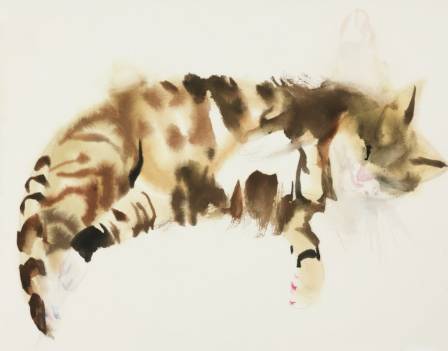
We recently welcomed Rocket, a fluffy white-and-grey kitten, into our home, which inspired me to paint a series of watercolor kittens, especially from behind—they’re just so adorable sitting quietly. This post also celebrates pet adoption, as June is National Adopt-a-Cat Month.
Last year, I began dedicating June to painting cats. One of my popular tutorials features loose, “blobby” cats, and during my livestream I also painted some playful cat paws using acrylic gouache.
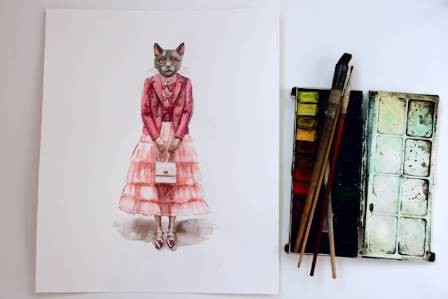
Supplies Needed:
Paint: Holbein Artists’ Watercolors
Brushes: Creative Mark’s Mimik Synthetic, round size 2
Paper: Legion Stonehenge Aqua Cold Press, 8″ x 10″
Washi tape
Water jars
Pencil and eraser
Paper towel or cotton rag
All my recommended supplies are linked here. Some links are affiliate links, which means I earn a small commission at no extra cost to you. I only share products I personally use and trust—your support helps keep this blog running.
Step 1: Sketch Your Kitten with Circles
Start by constructing the basic shapes using circles. Place a small circle for the head. Below it, draw a slightly narrower oval for the neck area. The bottom of the kitten should be a larger circle, roughly twice the width of the oval. Finish with two small triangles on top for the ears. That’s your basic framework!
Step 2: Choose a Small Brush
I prefer a round size 2 brush for kittens that are 2–3 inches tall. If your shapes are larger, feel free to use a bigger brush.
Step 3: Apply a Light Wash
Sketch the kitten lightly with your brush and add a gentle wash of color. I paint a variety of cat colors—grey, black, brown, tan, and more. While the initial wash is still damp, try a wet-on-wet technique by dropping in some more concentrated pigment or a different color. This creates natural blending, perfect for calico or multi-colored cats.
Step 4: Layer in Details
Once the first layer is completely dry, start adding stripes, spots, or long-haired textures. Make sure your brush isn’t too wet and use less water in the paint to avoid disturbing the previous layer. This will help the markings stay crisp and give your kittens a distinctive look.
Final Thoughts
Layering carefully and paying attention to your brush strokes allows your watercolor kittens to feel alive and unique. Focus on the back view for a charming, sitting pose.
Thank you for following along with this tutorial! I’d love to see your versions of watercolor kittens.